A Heli-Ski Trip Contingency Map

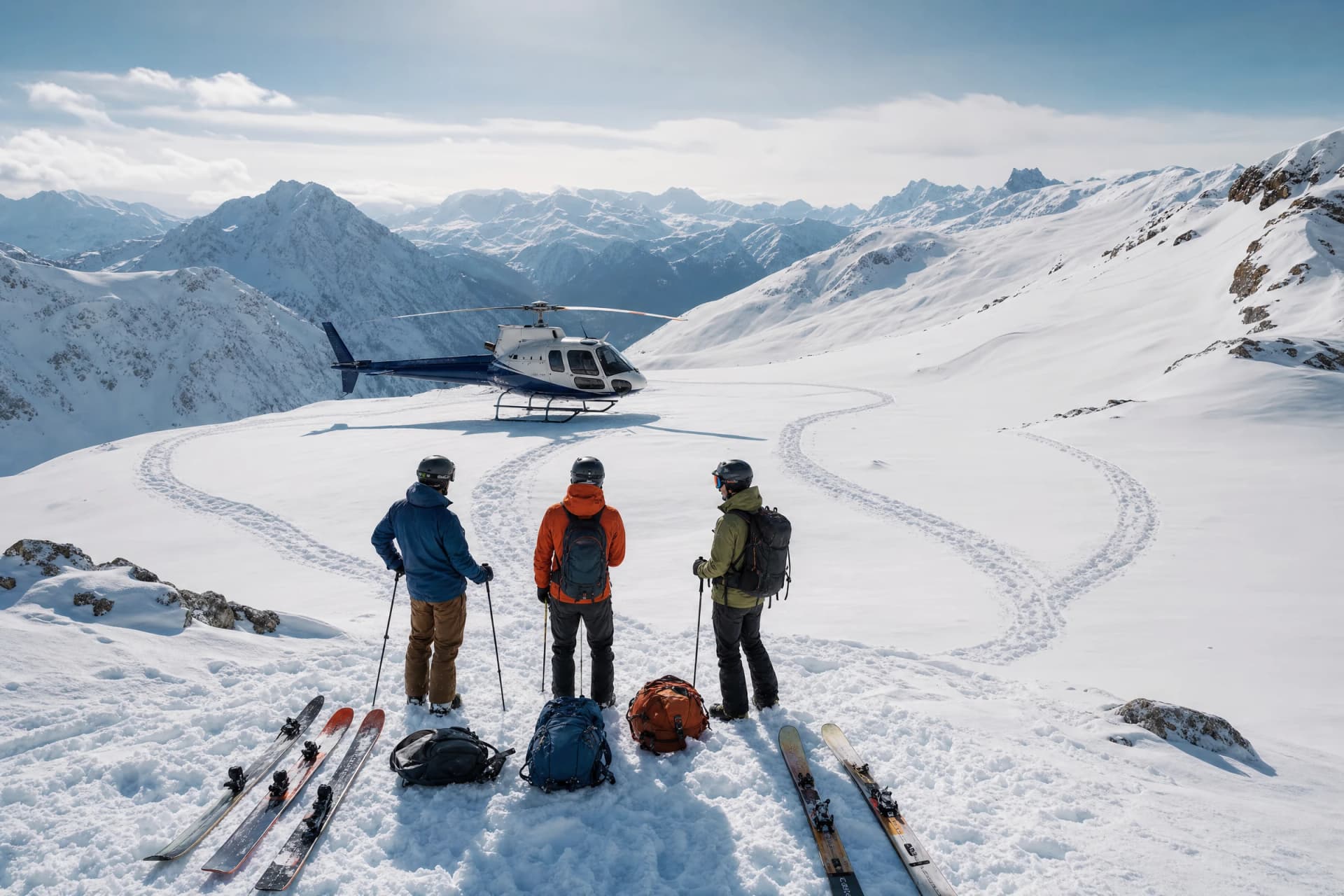
A heli-ski trip is built around a narrow chain of decisions: the right skier, the right group, the right equipment, the right flying window and a workable journey to the base. When one link changes, the useful response is not improvisation for its own sake. It is to ask one clear question, choose the least complicated workable option and know what happens next.
The U.S. Department of State’s adventure-travel guidance advises travelers to research the activity provider, local conditions and safety requirements, check that appropriate gear, equipment and training are available, and keep relevant contacts accessible. The FAA’s preflight guidance is written for pilots, not passengers, but it reinforces a useful planning discipline: keep the information current, identify what has changed and make the next decision from the updated picture.
Use this map before departure and keep it accessible during the trip. For broader trip formats and destinations, start with the Heliski International experience directory. For background on how to think about the trip, aircraft and evidence together, use the Heliski International planning library.
1. Does the planned skiing still fit the least-confident skier?
Ask
Has anyone’s ability, confidence, preferred pace or appetite for the proposed terrain changed since the group made the booking?
Do not reduce this to a label such as “intermediate” or “advanced.” Ask what the skier can comfortably repeat when tired, in variable snow or on unfamiliar terrain. Ask the same question of the group rather than letting the most confident skier set the standard by default.
Preferred choice: keep the group together at a suitable level
If the group can agree on a more conservative shared plan, make that the starting point. A trip is easier to manage when everyone understands the same objective and the same boundaries.
Fallback choice: split the day, change the format or stop skiing
If the group cannot find a shared fit, ask what alternatives are actually available: a different group arrangement, a less demanding day, a non-ski activity or no participation for the skier who is not comfortable. The correct fallback is the one that avoids pressuring a person into terrain chosen for someone else.
The useful question is not “Can we still get everyone out?” It is “What arrangement lets every participant make a clear decision without being carried by the group’s momentum?”
2. What changes if one person leaves, arrives late or can no longer ski?
Ask
Which parts of the plan depend on a fixed number of people: transport, rooms, group composition, guide allocation, helicopter seating or the timing of the first day?
Keep this as a logistics question, not a negotiation conducted from memory. Put the change in writing to the relevant contact and ask for the current options.
Preferred choice: revise the plan as a group
Tell the group exactly what has changed, who is affected and which decisions need to be made. Then ask for a revised outline rather than assuming that the original arrangement simply becomes smaller.
A useful revised outline has four lines:
- who is still travelling;
- who is still skiing;
- what day or activity is affected;
- what decision is needed by when.
Fallback choice: preserve the trip for the remaining participants
If the original configuration cannot continue, choose the simplest available arrangement for the people who remain. That may mean changing the group format, accepting a different rhythm or making the trip partly non-skiing. Do not fill an empty place with an unprepared substitute without confirming that the new person fits the plan.
The aim is not to preserve every original detail. It is to prevent one change from becoming five untracked assumptions.
3. What is the fallback if an essential item is missing?
Ask
Is the missing item required for participation, needed for comfort, or merely preferred? Who can confirm the distinction, and where can a replacement or alternative be obtained?
Make two lists before travelling: items that must travel with you, and items whose absence can be resolved locally. Keep the first list short and specific. It should not depend on remembering a conversation at the airport.
Preferred choice: replace or borrow the item before the day starts
Contact the operator or trip contact as soon as the omission is known. Ask what exact item is needed, whether an approved substitute exists and when it must be ready. If the answer is unclear, treat the item as unresolved rather than assuming that a similar-looking object is adequate.
Fallback choice: change the activity or do not participate
If the item cannot be sourced or its suitability cannot be confirmed, change the plan. A non-ski day, a different activity or sitting out is a cleaner decision than turning a missing piece of kit into a last-minute argument.
Pack the items you cannot easily replace where you can reach them during travel. Keep documents, personal essentials and any small items you rely on together and easy to locate. This is not about packing more; it is about separating irreplaceable from replaceable.
4. What should happen when the flying day is cancelled?
Ask
What is known now, what is still being monitored and when will the next decision be made? Is the next choice to wait, ski elsewhere, take a non-ski option or end the planned activity?
Ask for the next decision point, not a promise about the final outcome. Do not turn a public forecast, an app or a view from the lodge window into a run-by-run conclusion. Ask the operator or trip contact what is currently available and what information will trigger the next update.
Preferred choice: use the next available decision window
If the day is paused, keep the group ready for the next confirmed update. Use the time to reorganize equipment, food, transport and personal plans without treating the delay as evidence that the day will later fly.
Fallback choice: make the down day a real day
Choose from the options that are genuinely available at the base: rest, local activities, training, sightseeing or simply doing less. If the trip has remaining time, ask how the schedule can be re-sequenced. If it does not, ask what documentation of the cancelled plan you should keep for your own records.
The important distinction is between “waiting for information” and “waiting for the result you want.” The first is a planning state. The second is a source of pressure.
5. What happens if travel disruption threatens the arrival or return?
Ask
Which part of the journey is affected: the flight to the region, the ground connection, the transfer to the lodge, or the journey home? Who controls that segment, and who needs to know first?
Send one concise message with your location, the disrupted segment, the new estimated arrival or departure information and the decision you need. Keep confirmations, ticket information and contact details together.
Preferred choice: protect the trip’s first and last decision points
If disruption threatens arrival, ask whether the group should continue, delay its onward movement, meet later or remove the affected day from the plan. If disruption threatens the return, ask what departure must be protected and what can be simplified before it.
Do not book a complicated chain of replacements before the responsible contact has confirmed where the plan now begins and ends. A fast booking can create a second problem if it takes you to the wrong place or at the wrong time.
Fallback choice: shorten, reschedule or convert the trip
If the original sequence no longer works, choose the least fragile version: fewer moving parts, fewer assumptions and a clear person responsible for each next step. That may mean arriving later, leaving earlier, shortening the skiing plan or converting part of the trip into non-skiing time.
The contingency is not a verdict on the trip. It is a way to keep one disrupted segment from dictating every decision that follows.
The one-page version
Write down five questions before you leave:
- If the least-confident skier says no, what is our shared alternative?
- If one person leaves or arrives late, who confirms the revised arrangement?
- Which missing items are essential, and what is the replacement path?
- If the helicopter does not fly, when is the next decision and what can we do meanwhile?
- If travel breaks, which segment is affected and who coordinates the next move?
A good contingency map does not predict the mountains, control another person’s decision or guarantee a particular outcome. It gives the group a common language for changing course. That is the practical advantage: fewer assumptions, clearer questions and a fallback chosen before disappointment starts making the decisions.
Read next
Planning · Explainer
How to Vet a California Heli-Ski Booking Before You Pay
A practical, question-led checklist for checking dates, weather contingencies, ability expectations, equipment, logistics and cancellation terms before committing to a heli-ski day.
25 Aug 2026
Snow & Safety · Explainer
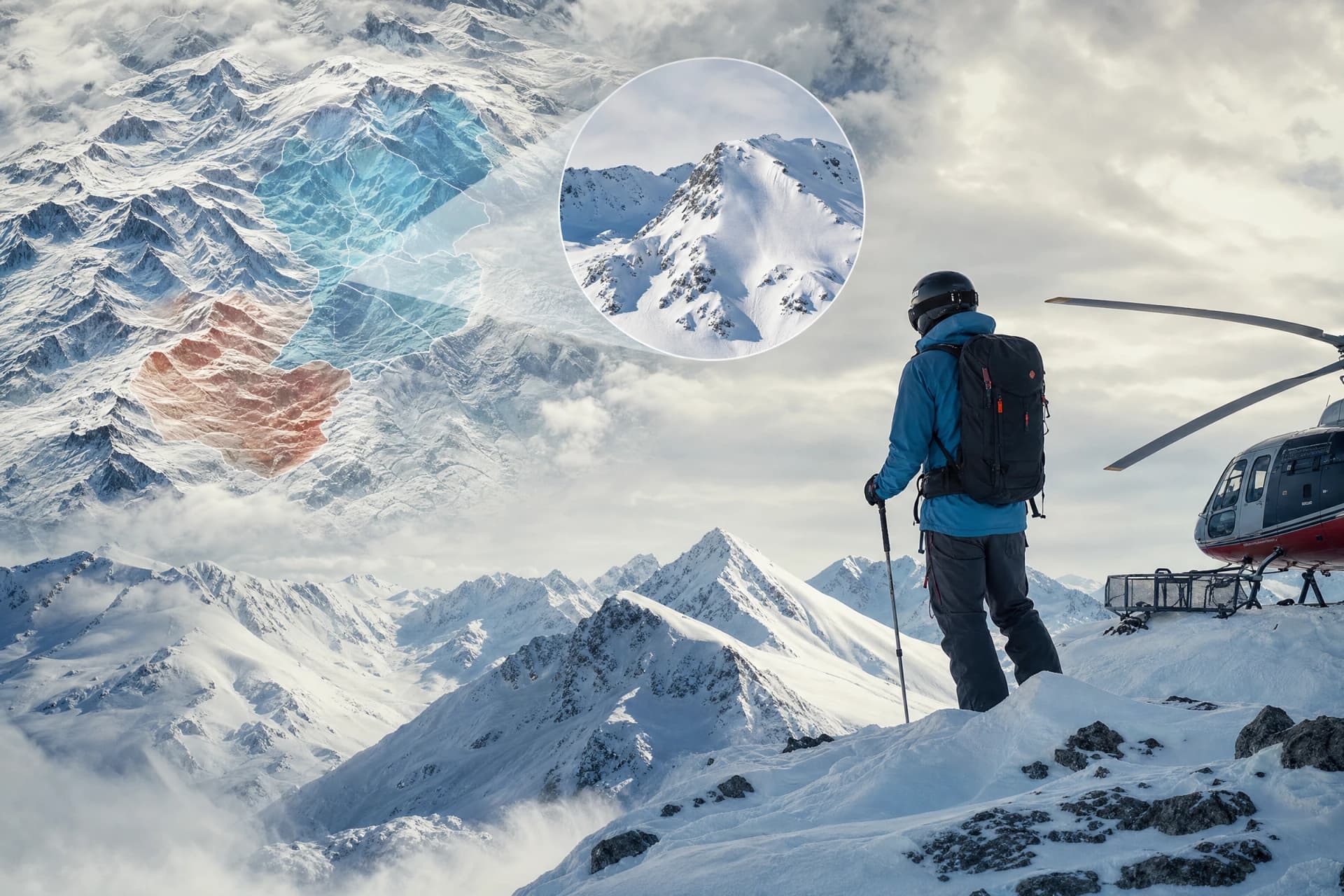
From Regional Bulletin to Local Decision: What an Avalanche Forecast Can—and Cannot—Tell You
Public avalanche forecasts are regional information products. Research from western Canada explains why local observations still matter, and why a forecast rating should not be mistaken for a terrain-specific approval.
25 Aug 2026
Gear & Skills · Article
Bella Coola Heliski: Exclusive Wilderness Adventures with Heliski International
At Heliski International, we partner with the world’s top heliski operators to offer our clients the most unforgettable experiences in the mountains. Bella Coola Heliski, one of our exclusive operators, takes heliskiing to a whole new…
11 Feb 2025